
Just yesterday, a patient walked into our clinic in Wakad saying, “Doctor, my vision is slightly blurry when I work on my laptop, but it’s fine otherwise. Should I be worried?”
This is a question I hear almost every day at Clarity Eye Care. Many people ignore early warning signs, thinking they’ll go away on their own. But here’s what I’ve learned after years of practice: your eyes are trying to tell you something important.
As an ophthalmologist in Wakad, I’ve seen patients who waited too long, turning a simple problem into something more serious. That’s why I’m writing this blog: to help you understand when your eyes need professional attention.
Let me share the five most common warning signs I see in my practice:
Does your head hurt after working on your computer or watching TV? Many of my patients dismiss this as work stress or fatigue.
Last month, a software engineer came to me with constant headaches. He thought it was his hectic schedule. After a comprehensive eye check-up, we discovered he had uncorrected refractive error – his eyes were straining to focus, causing those headaches.
What it could mean: Eye strain, refractive errors (nearsightedness, farsightedness, astigmatism), or even early signs of glaucoma.
“Doctor, I avoid driving at night because everything looks blurry,” a patient told me recently. This is not normal ageing – it’s a warning sign.
Night vision problems can indicate several conditions:
If you’re having trouble reading signs at night or seeing clearly in dim restaurants, don’t ignore it.
I often hear, “My eyes water all the time, but I just think it’s pollution or dust.”
While environmental factors do play a role in Wakad and Hinjewadi, persistent watering or redness could signal:
This is the most serious warning sign. If you suddenly see:
Stop reading this blog and call us immediately. These could be signs of retinal detachment or other emergencies that need urgent attention.
I once had a patient who ignored floaters for weeks, thinking they’d disappear. By the time he visited, the problem had progressed significantly. Early detection could have made treatment much easier.
Are you holding your phone farther away to read messages? Do your children squint when watching TV? Are you struggling to read medicine labels or restaurant menus?
These seemingly small changes are your body’s way of compensating for vision problems. Don’t wait until you can’t see clearly at all.
For children, this is especially important. Poor vision can affect their studies and development. At Clarity Eye Care, we provide comprehensive pediatric eye examinations to catch problems early.
Many patients feel nervous before their first visit. Let me walk you through exactly what happens, so you know what to expect.
Step 1: Medical History We’ll discuss your symptoms, family history, medications, and lifestyle. This helps us understand your unique needs.
Step 2: Vision Testing Using advanced equipment, we check your visual acuity, how clearly you see at different distances. This isn’t just reading letters on a chart; we use computerised systems for accurate measurements.
Step 3: Refraction Test. If you need glasses or contact lenses, this test determines your exact prescription. We use modern auto-refractometers along with manual techniques to ensure precision.
Step 4: Eye Pressure Measurement. This is crucial for detecting glaucoma. High eye pressure can damage your optic nerve, often without symptoms. We use non-contact tonometry as it is quick and painless.
Step 5: Detailed Eye Examination Using a slit lamp microscope, I examine:
Step 6: Dilated Eye Exam (When Needed) For comprehensive evaluation, especially for patients over 40 or those with specific concerns, we dilate your pupils. This allows me to thoroughly examine your retina and optic nerve.
Don’t worry – the drops might blur your vision for a few hours, but they’re safe. Just bring sunglasses for your drive home.
Depending on your symptoms, we might perform:
At Clarity Eye Care, we don’t just check your vision – we provide comprehensive care using state-of-the-art technology. With my fellowship training in Comprehensive Ophthalmology and Glaucoma, I ensure every patient receives expert diagnosis and personalised treatment.
We serve patients from Wakad, Hinjewadi, and surrounding areas with:
I always tell my patients: your eyes won’t suddenly fail overnight. They give you warning signs. The question is – are you listening?
Regular eye check-ups are essential, even if you think your vision is fine. Many serious eye conditions, like glaucoma and diabetic retinopathy, show no symptoms in the early stages.
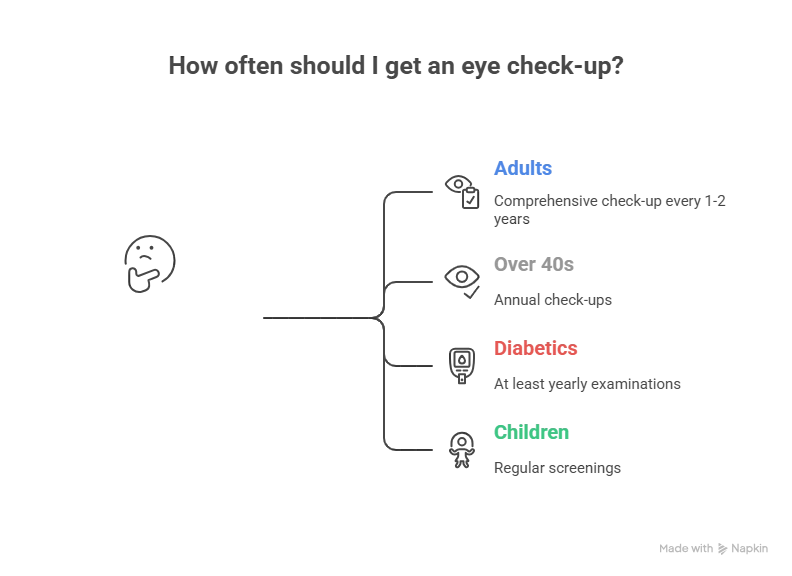
If you’re experiencing any of the warning signs I mentioned, or if it’s been more than a year since your last eye examination, I encourage you to schedule an appointment.
At our clinic in Wakad, we’re committed to helping you see clearly and maintain healthy eyes for life. No concern is too small – whether it’s mild discomfort or persistent vision problems, we’re here to help.
Your eyes are precious. They allow you to see your loved ones, do your work, and enjoy life’s beautiful moments. Don’t take them for granted.
Book your comprehensive eye check-up today and take the first step toward better eye health.