
Last week, a patient walked into Clarity Eye Clinic with a problem. She’d been putting off her cataract surgery for two years. Why? Because her neighbour told her she needed to wait until the cataract was “ripe.”
I hear this all the time.
And honestly? It breaks my heart. People are living with blurry vision because of outdated information that hasn’t been true for decades.
So today, I’m busting the seven biggest cataract myths I hear at my practice in Hinjewadi. Some of these might shock you.
This is the granddaddy of all cataract myths.
Your parents probably heard this. Maybe even your grandparents. But here’s the thing. This advice comes from the 1970s and 80s, when cataract surgery was completely different.
Why people believed this: Older surgical techniques were more invasive. Surgeons actually had to remove the entire clouded lens in one piece. So they waited until the cataract hardened enough to extract it whole. Made sense back then.
The truth now: Modern cataract treatment in Wakad uses phacoemulsification. We break up your cloudy lens with ultrasound and remove it through a tiny incision. No stitches. No waiting. In fact, operating earlier is actually safer because softer cataracts are easier to remove.
Waiting just means you’re living with worse vision than you need to.
I get it. Your mom is 78. The word “surgery” scares you.
But here’s what most people don’t realise.
Why this myth exists: Any surgery sounds risky when you’re talking about someone you love. And yes, older patients often have other health conditions. So families worry.
The reality: Cataract surgery is one of the safest procedures in all of medicine. We perform it under local anaesthesia, just numbing drops, really. You don’t go under general anaesthesia. The surgery takes 15-20 minutes.
I’ve successfully operated on patients in their 90s. Age isn’t the issue. The real risk? Falling because you can’t see properly. That’s far more dangerous than the surgery itself.
This one confuses everyone.
Sometimes patients return to Clarity Eye Clinic months or years after surgery, saying, “Doctor, I think my cataract is back.”
Why this seems true: Your vision does get cloudy again in about 20-30% of cases. So yeah, it feels like the cataract returned.
What’s actually happening: We can’t remove your natural lens capsule during surgery; we need it to hold your new artificial lens. Sometimes this capsule gets cloudy over time. It’s called posterior capsule opacification or PCO.
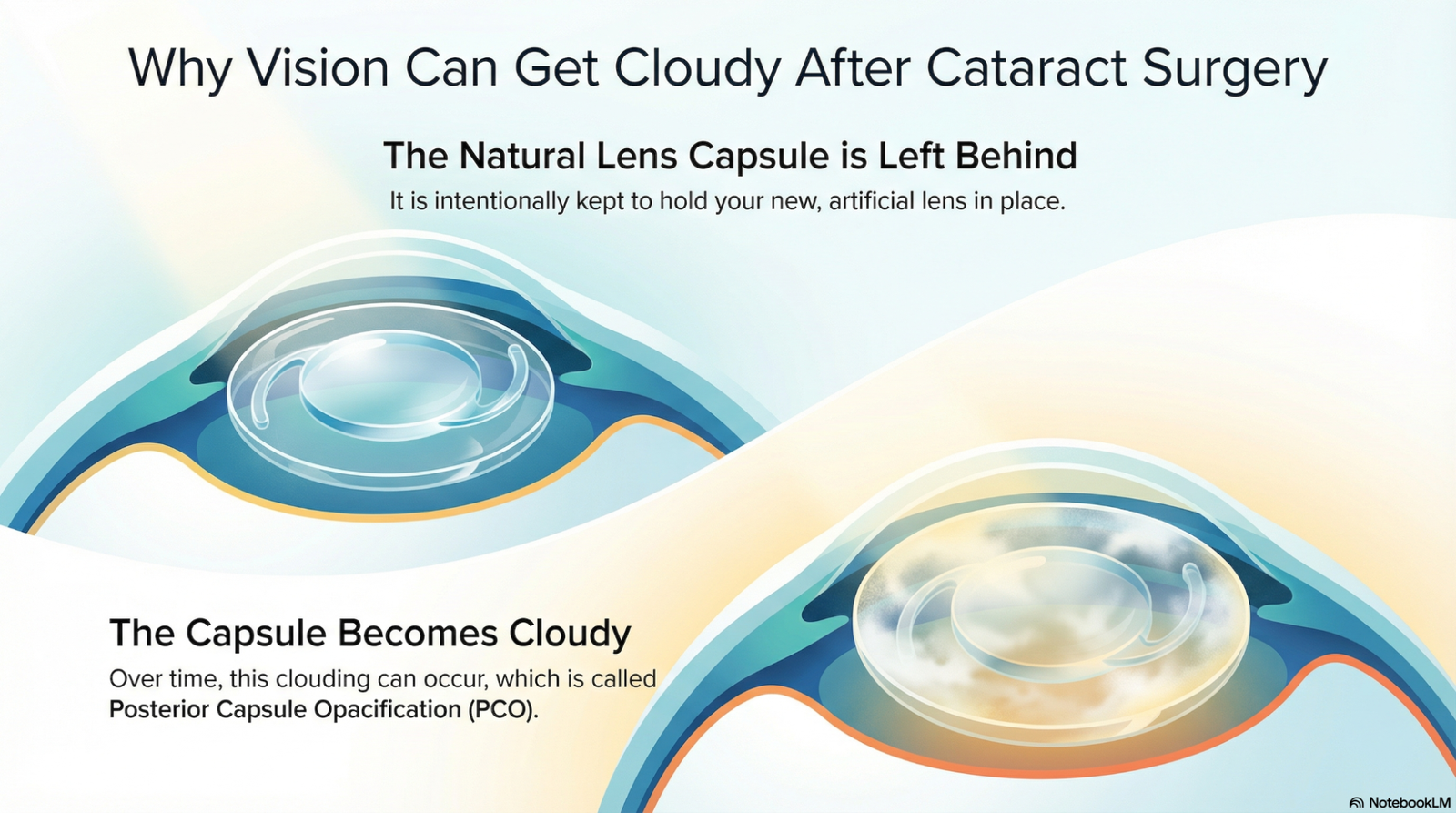
But here’s the good news. We fix it with a simple laser procedure that takes two minutes. No surgery. No cutting. Your vision clears up immediately.
The cataract itself never comes back. Ever. We removed it completely.
Oh, this one.
I’ve had patients show up with turmeric paste, special eye drops from the internet, and all sorts of “natural” remedies.
Why people want to believe this: Surgery sounds scary. Pills and drops sound easy. Plus, the internet is full of miracle cures that promise quick fixes.
The hard truth: Nothing dissolves a cataract. Not drops. Not vitamins. Not herbs. Not exercises.
A cataract is a physical change in the proteins in your lens. They’ve clumped together and turned cloudy. You can’t un-clump them any more than you can unscramble an egg.
The only proven cataract treatment is surgery.
Now, can a healthy diet help prevent cataracts from forming in the first place? Possibly. But once you have one? Surgery is your only option.
This surprises people.
Most cataract specialists, including me, don’t recommend this.
Why patients think this makes sense: It’s convenient, right? One trip to the hospital. Done and dusted. Get both eyes fixed together.
Why we don’t do it: If something goes wrong (complications are rare, but possible), you don’t want both eyes affected. Plus, your brain needs time to adjust to the new lens in the first eye before we do the second one.
I typically wait 1-2 weeks between surgeries. This gives me a chance to see how your first eye healed and make any adjustments for the second eye.
Your safety matters more than convenience.
I wish this were true.
But let me be straight with you.
Why this myth is so common: Modern intraocular lenses are incredible. Some patients really don’t need glasses afterwards. So word spreads.
The nuanced reality: It depends on which lens you choose and your individual eyes. Standard monofocal lenses give you great distance vision, but you’ll likely need reading glasses. Premium multifocal lenses can reduce your dependence on glasses, but they’re not perfect for everyone.
During your consultation at Clarity Eye Clinic, we’ll discuss which lens suits your lifestyle. Are you a reader? Do you drive at night? Do you work on computers all day?
Your expectations should match your lens choice. I’d rather you know the truth upfront than be disappointed later.
Wrong.
Yes, age-related cataracts are the most common type. But they’re not the only type.
Why age is associated with cataracts: Most people develop cataracts in their 60s or 70s. So naturally, we think of it as an “old person problem.”
What people don’t realise: Diabetes accelerates cataract formation. I’ve treated patients in their 40s with advanced cataracts due to uncontrolled blood sugar. Trauma can cause cataracts in young adults. Some babies are even born with congenital cataracts.
Steroids, smoking, and excessive UV exposure also increase your risk, regardless of age.
If your vision is getting cloudy, don’t dismiss it because you’re “too young.” See a cataract specialist and get it checked.
Look, I know I’ve just thrown a lot of information at you.
Here’s what I want you to remember: Cataracts are treatable. Modern surgery is safe, quick, and effective. And waiting doesn’t help; it just steals months or years of clear vision from your life.
If you’re in Hinjewadi, Wakad, or anywhere in Pune and you’re struggling with blurry vision, I’d love to see you at Clarity Eye Clinic. We’ll sit down. Talk about your concerns. Look at your eyes. And create a plan that makes sense for you.
No pressure. No rush. Just honest advice from a cataract specialist who’s helped thousands of people see clearly again.
Because here’s the thing – you deserve to see your grandkids’ faces clearly. To read without squinting. To drive confidently at night.
Don’t let old myths steal that from you.
Book your consultation today, and let’s talk about your vision.