
Difference Between Dry Eye and Eye Infection: How to Know What Your Eyes Are Trying to Tell You
Table of Contents
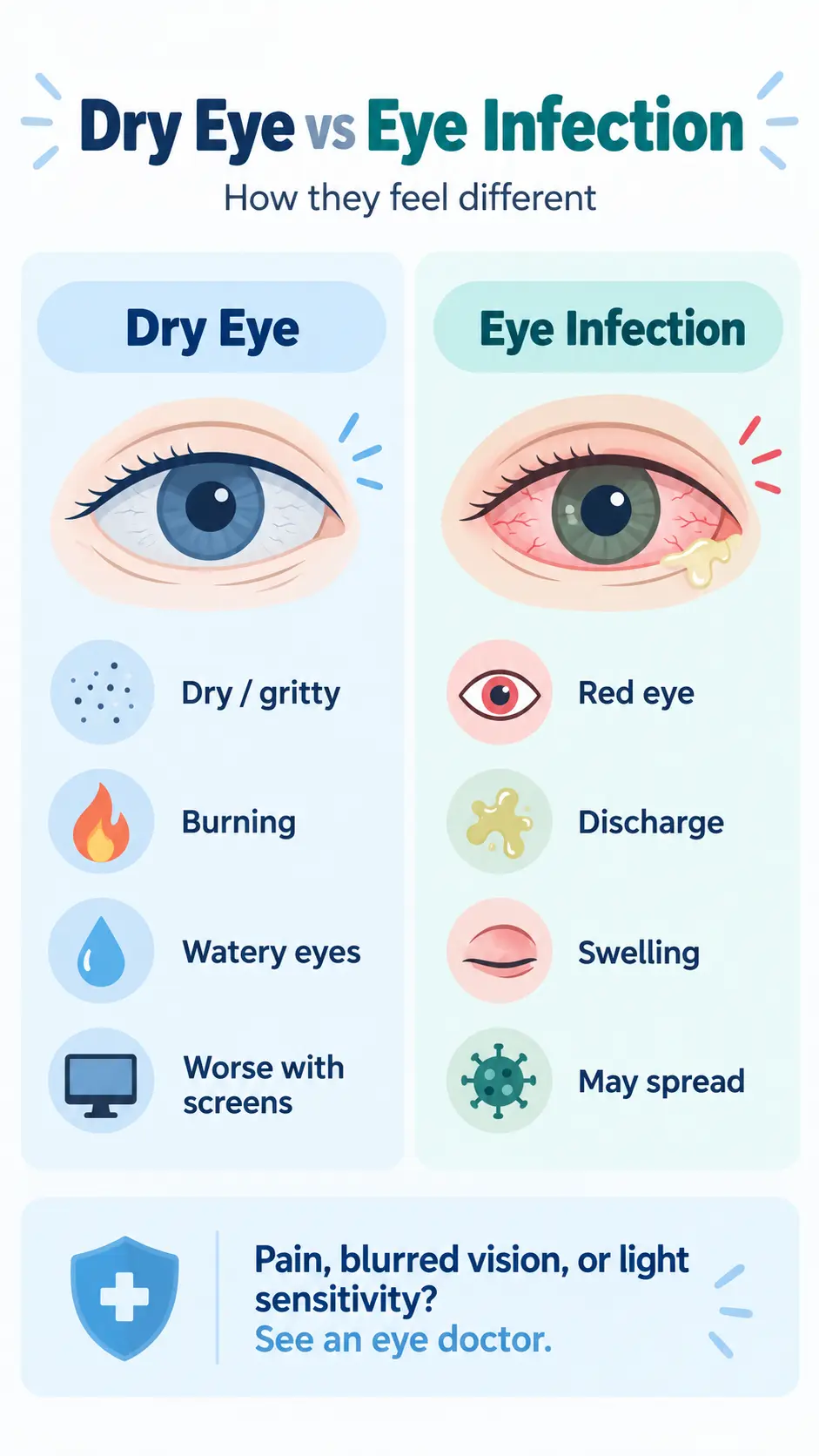
Quick Summary: Dry Eye vs Eye Infection
- Dry eye: Usually happens when the eyes don’t produce enough tears or tears evaporate too quickly.
- Eye infection: Can occur when viruses, bacteria, or other infectious agents affect the eye.
- Both can cause: Redness, watering, burning, irritation, and a gritty feeling.
- Dry eye clues: Symptoms may worsen with screen use, air conditioning, dry weather, or prolonged reading.
- Eye infection clues: Sticky discharge, crusting of the eyelashes, swollen eyelids, or symptoms spreading from one eye to the other may occur.
- Contagious? Dry eye is not contagious. Some eye infections, particularly viral and bacterial conjunctivitis, can spread.
- Treatment differs: Dry eye and eye infections require different management, so avoid using antibiotic eye drops without medical advice.
- See an ophthalmologist: Seek evaluation if you have severe pain, light sensitivity, reduced vision, significant swelling, thick discharge, or persistent/worsening redness.
Have you ever noticed your eyes feeling tired, itchy, or dry after spending hours on your phone or laptop? You may ignore it, thinking it is just screen fatigue.
But when redness, burning, watering, or irritation starts, many people wonder, “Is this just dry eyes, or do I have an eye infection?”
This confusion is very common. Dry eye and an eye infection can cause similar symptoms, but their causes are different. Using random over-the-counter eye drops may give temporary relief, but it may not treat the actual problem.
As an ophthalmologist, I often see patients who wait for symptoms to settle on their own. In this article, I will help you understand the difference between dry eyes and an eye infection, which symptoms need attention, and when to consult an eye specialist.
Dry Eye vs Eye Infection: Why Do They Feel Similar?
Your eyes have a protective tear layer that keeps the surface smooth, comfortable, and healthy. When this tear film becomes unstable or reduces, it can lead to dry eye disease.
An eye infection, on the other hand, happens when microorganisms such as viruses or bacteria affect the eye surface. One common type is conjunctivitis, also called pink eye.
The confusion happens because both conditions can cause:
- Eye redness
- Watering
- Irritation
- Burning sensation
- Feeling like something is stuck in the eye
However, the reason behind these symptoms is different.
Dry eye is usually related to poor tear quality or faster tear evaporation. An eye infection involves inflammation caused by germs.
This is why treating every red eye as an infection can sometimes lead to the wrong approach.
What Are the Common Symptoms of Dry Eye?
Dry eye symptoms aren’t experienced same by all. They can vary from person to person. Some people feel dryness, while others experience excessive watering.
Common dry eye symptoms include:
1. Burning or stinging sensation
Many patients describe it as a “hot” feeling in their eyes. The eyes may feel tired, especially after reading, working on a computer, or using a mobile phone for long periods.
2. Gritty or sandy feeling
A common complaint is:
“It feels like there is dust inside my eye, but nothing is actually there.”
This happens because the eye surface isn’t properly lubricated.
3. Excessive watering
This surprises many people.
They think, “If my eyes are watering, how can they be dry?”
But when the eye surface becomes irritated, the body may produce extra tears as a protective response. These tears may not have the right quality to keep the eye comfortable.
4. Symptoms that become worse with screen use
When we look at screens, we blink less often. Reduced blinking allows tears to evaporate faster.
Many patients notice symptoms increasing during:
- Long computer work
- Mobile phone use
- Air-conditioned environments
- Dry weather
5. Fluctuating vision
Some people notice their vision becomes slightly blurry and improves after blinking. This can happen because the tear film helps maintain a smooth optical surface.
What Are the Symptoms of an Eye Infection?
An eye infection, especially conjunctivitis, may present differently depending on the cause.
Common signs include:
If you have diabetes, please listen carefully. This is critical.
Poor blood sugar control dramatically accelerates cataract formation. Studies show that HbA1c levels above 58 mmol/mol increase cataract risk by 20%. pmc.ncbi.nlm.nih
But excellent diabetes management can prevent early cataracts. I’ve seen it happen. Patients who keep their sugars well-controlled often have healthier lenses than non-diabetics who don’t take care of themselves.
Your HbA1c isn’t just a number on a lab report – it’s directly affecting your vision. Keep it below 7% if possible.
1. Redness of the eye
The white part of the eye may look pink or red because of inflammation.
2. Discharge from the eye
This feature can help differentiate infection from simple dryness.
You may notice:
- Sticky discharge
- Crusting around eyelashes
- Eyelids sticking together, especially after waking up
3. Swelling or irritation around the eyelids
Your eyelids may look swollen or feel uncomfortable.
4. Infection spreading to the other eye
Some forms of conjunctivitis, especially viral conjunctivitis, can spread from one eye to the other.
5. Recent exposure to someone with pink eye/conjunctivitis
If someone close to you has conjunctivitis, your risk of developing an infection may increase.
According to the CDC, conjunctivitis treatment depends on the cause. Many viral cases improve on their own, while bacterial cases may sometimes require antibiotic treatment after evaluation.
Listen, I’m here at Clarity Eye Care in Wakad and Hinjewadi whenever you need me. Your vision is precious – let’s protect it together with real science, not WhatsApp forwards.
Bring your questions, your concerns, and your printouts from the internet. We’ll go through them together, and I’ll give you the straight truth, always.
Because when it comes to your eyes, you deserve facts, not fiction.
Difference Between Dry Eye and Eye Infection: A Simple Comparison
Feature | Dry Eye | Eye Infection |
Main problem | Lack of proper lubrication | Inflammation due to infection |
Redness | Common | Common |
Watering | Can happen due to irritation | Can happen |
Discharge | Usually minimal | May have sticky discharge |
Itching | Possible | Common in some infections, especially allergy-related |
Both eyes affected | Can happen | Can happen |
Contagious | No | Some infections can spread |
Many eye conditions overlap, so it is necessary that you consult an ophthalmologist and do not judge everything on your own.
Can Dry Eye Be Mistaken for Conjunctivitis?
Yes, this happens frequently.
A person with dry eyes may have:
- Redness
- Watering
- Burning
- Eye discomfort
These symptoms can look similar to conjunctivitis.
A common mistake is assuming:
“Red eye = infection = antibiotic eye drops.”
This is not always correct.
Using the wrong eye drops without understanding the cause may not solve the problem. In some situations, it can delay proper treatment.
During an eye examination, an ophthalmologist looks at several factors, including:
- How long symptoms have been present
- Type of discomfort
- Presence of discharge
- Tear film condition
- Eye surface changes
The diagnosis is based on the complete picture, not only one symptom.
Dry Eye and Conjunctivitis Treatment: Are They the Same?
No.
The treatment depends on what is causing the problem.
Dry Eye Treatment
Dry eye management usually focuses on improving the eye surface and reducing irritation.
Depending on the severity, treatment may include:
- Lubricating eye drops recommended by an eye specialist
- Managing screen habits
- Improving blinking habits
- Reducing exposure to dry air or smoke
- Treating underlying causes
Simple lifestyle changes can also help:
- Follow the 20-20-20 rule during screen work
- Take regular breaks
- Avoid direct airflow from fans or air conditioners into your eyes
- Stay hydrated
Treatment depends on whether the infection is viral, bacterial, allergic, or caused by something else.
For example:
- Viral conjunctivitis often improves with supportive care.
- Bacterial conjunctivitis may require medication in selected cases.
- Allergic conjunctivitis requires avoiding triggers and controlling allergy-related inflammation.
The CDC also advises avoiding sharing towels, pillows, or personal items when conjunctivitis is suspected because some forms can spread easily.
When Should You See an Ophthalmologist?
Many mild eye irritations improve with basic care. However, you should get your eyes checked if you notice:
- Reduced or blurred vision
- Severe eye pain
- Increased sensitivity to light
- Symptoms getting worse instead of better
- Significant swelling
- Injury or chemical exposure to the eye
- Persistent redness that does not improve
- Thick discharge from the eye
Don’t ignore symptoms just because they seem mild. The pattern and duration of symptoms matter.
Why Self-Diagnosing Red Eyes Can Be Difficult
Many patients tell me:
“I searched online and thought it was an infection.”
The concern is understandable. But the eye does not always follow simple rules.
Two people can have red eyes for completely different reasons.
One person may need help managing dry eye. Another may need treatment for infection. Someone else may have an allergy, inflammation, or another eye condition.
The safest approach is to observe your symptoms and avoid guessing a diagnosis based only on appearance.
Questions You Should Particularly Note Before You Visit an Ophthalmologist
Before your appointment, it helps to note:
- When did the symptoms start?
- Is one eye affected or both?
- Is there discharge?
- Is there pain or only irritation?
- Does screen use make it worse?
- Did you recently have a cold, allergy, or contact with someone with an eye infection?
- Are you using any eye drops?
These details help your ophthalmologist understand what your eyes need.
Final Thoughts
The difference between dry eye and an eye infection isn’t always obvious because both can cause redness, watering, and discomfort.
Dry eye usually happens because the eye surface is not properly lubricated. Eye infections happen because of inflammation caused by infectious agents. Some symptoms overlap, so guessing based only on redness can be misleading.
If your eyes feel uncomfortable, do not panic. But do pay attention to warning signs.
Your eyes are giving you information. Understanding those signals and getting the right advice at the right time can protect your comfort and vision.