
Let me start with something most people get wrong.
Vision loss from diabetes does not happen suddenly.
It builds quietly over time.
By the time you notice a problem, the damage has often been there for months or even years.
In my clinic, I hear this often:
“Doctor, everything was fine… then suddenly it became blurry.”
It was not sudden. It was unnoticed. In this blog, I will guide you about the signs of diabetic retinopathy.
Think of your eye like a camera.
The retina is the sensor.
It captures everything you see and sends it to your brain.
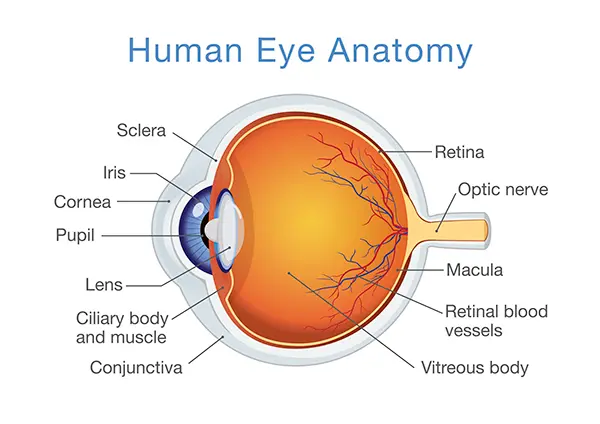
At the center of the retina is the macula. This is what allows you to:
Now here is the important part.
If the retina gets damaged, glasses will not fix it.
This is not a power issue. It is a tissue problem.
Diabetes affects the smallest blood vessels in your body. The retina is full of them.
When blood sugar stays high:
This entire process is called diabetic retinopathy.
And it happens silently.
When symptoms do appear, they are often mild at first.
These are the early signs of diabetic retinopathy:
Many patients ignore these.
“Thoda strain hoga,” they assume.
That assumption causes a delay.
This is where most people make a mistake.
In the early stages, diabetic retinopathy usually has no symptoms.
Your vision feels normal. Your daily routine is unaffected.
But damage is already happening inside the retina.
Remember this clearly:
No symptoms does not mean no disease.
This condition does not develop randomly. There are clear risk factors:
If you fall into multiple categories, your risk increases significantly.
Most people wait for vision problems before seeing an eye specialist.
The thinking is simple:
“I can see fine, so everything must be fine.”
That logic fails in diabetic eye disease.
By the time vision is affected, the disease is often already advanced.
If you have diabetes, a yearly retinal exam is not optional.
During this exam, we dilate your eyes and directly examine the retina.
We can detect:
All of this can be identified before you notice any symptoms.
This is the difference:
Early detection leads to simple management.
Late detection leads to complex treatment.
Yes. But only with consistent control.
Focus on what actually works:
There is no shortcut here. Control is the treatment.
If caught early, diabetic retinopathy can be managed effectively.
Treatment options may include:
Many patients maintain good vision when intervention happens on time.
Delay changes the outcome.
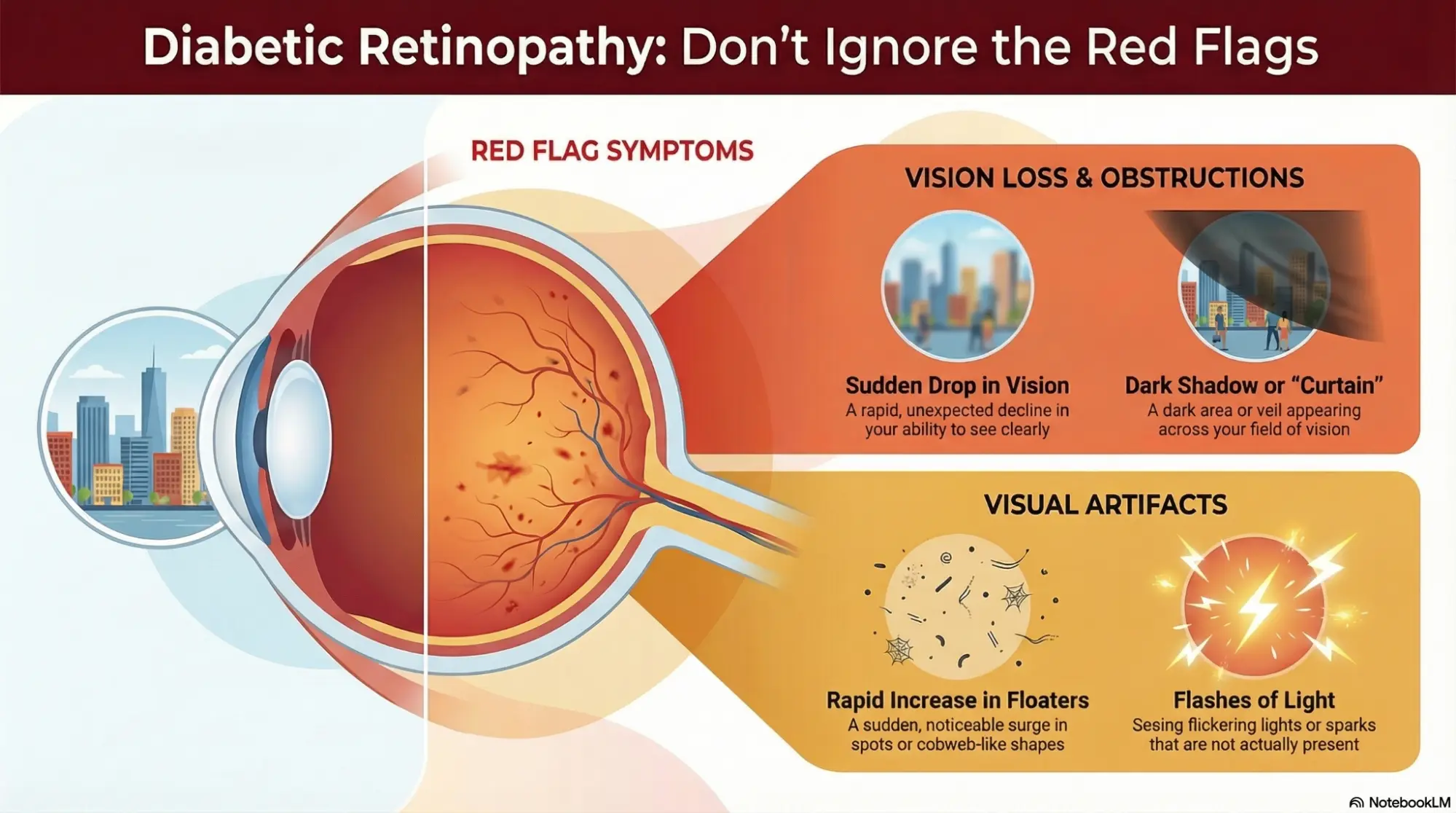
Do not wait if you notice:
These can indicate serious progression.
You may feel your vision is completely normal.
But diabetic eye damage does not wait for symptoms.
If you have diabetes, make this a rule:
Get your retina checked once every year. Even if everything feels fine.
Because in this condition, feeling fine is not reliable.