
Can Cataract Be Cured Without Surgery? An Ophthalmologist Explains

Medically reviewed by Dr. Nitesh Bhalla
MBBS, M.S. in Ophthalmology | 11+ years of Experience
Table of Contents
Key Takeaways
- Can cataract be cured without surgery? No. Once a cataract has formed, no proven eye drop, medicine, supplement, diet, or home remedy can remove it.
- Can early cataract be cured without surgery? An early cataract cannot be reversed, but it may not require surgery immediately if it is not significantly affecting your vision.
- Glasses, brighter lighting, magnification and anti-glare measures can sometimes make early cataract symptoms easier to manage.
- You do not usually need cataract surgery immediately after being diagnosed. The decision largely depends on how much the cataract affects your everyday life.
- Cataract surgery removes the cloudy natural lens and replaces it with an artificial intraocular lens (IOL).
- Regular eye exams matter because not every vision change is caused by cataracts.
Is Cataract Surgery the Only Option?
Being told you have a cataract can make one thought come immediately to mind:
“Does this mean I need surgery?”
Not necessarily today.
But there is another question that often follows:
“Can I get rid of the cataract without surgery?”
This is where we need to separate two things that are often confused.
You may be able to manage the effects of an early cataract without having surgery immediately.
But you cannot currently remove or reverse an established cataract without surgery.
That distinction is important.
Because if your vision is still comfortable, there may be no reason to rush into an operation.
At the same time, relying on eye drops, supplements, or home remedies with the expectation that they will make the cataract disappear can delay the treatment you may eventually need.
Why Does a Cataract Affect Vision?
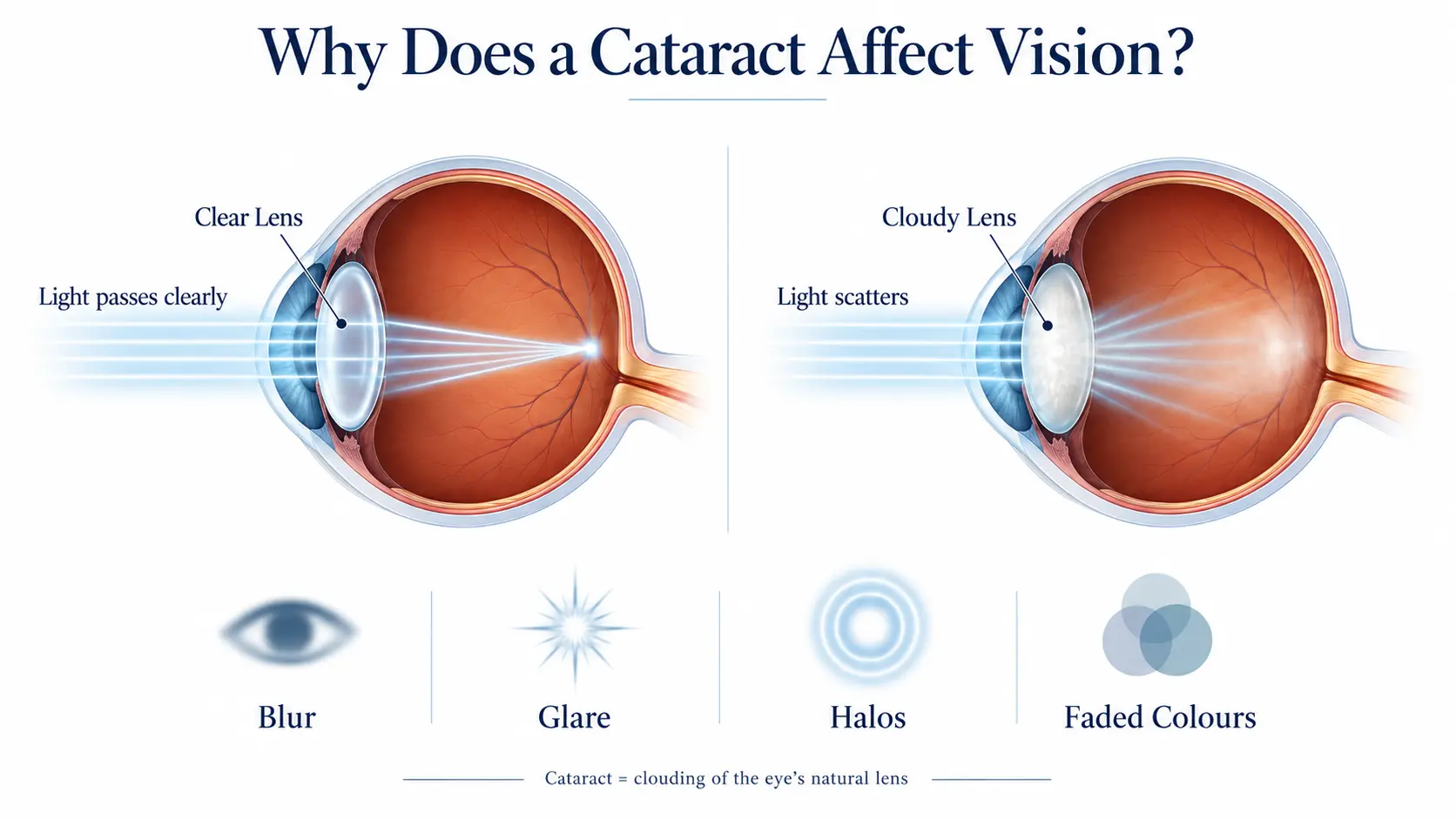
A cataract forms when the normally clear lens inside your eye becomes cloudy.
That lens sits behind the iris and helps focus light onto the retina.
As it becomes cloudy, light does not pass through it as cleanly.
The change is usually gradual.
You may first notice that:
- Your vision looks slightly hazy
- Lights seem brighter than before
- Headlights cause more glare at night
- Colours don’t look as vivid
- Reading becomes more difficult
- You need stronger lighting for close work
- Your glasses prescription keeps changing
At first, these changes may be so mild that you hardly notice them.
That is why an early cataract doesn’t automatically mean early surgery.
Can Early Cataract Be Cured Without Surgery?
If you’re asking whether early cataract can be cured without surgery, the answer is still no.
There is currently no established treatment that can take a cloudy natural lens and make it clear again.
But there is good news.
If the cataract is still mild, you may not need surgery yet.
- A new glasses prescription may improve your vision.
- Brighter lighting may make reading easier.
- Magnifying lenses can help with detailed tasks.
- Anti-glare sunglasses may make bright outdoor light more comfortable.
These measures can help you function better while the cataract is still at an early stage.
But they are management strategies, not a cure.
The cataract remains there.
Manageable doesn’t mean curable. Better glasses, brighter lighting and anti-glare measures may make early cataract symptoms easier to live with, but they do not remove the cataract.
“Can Cataract Eye Drops Remove It?”
This is one area where you need to be particularly careful.
You will find products online claiming to dissolve cataracts, reverse lens clouding or restore clear vision without an operation.
At present, there is no clinically established eye drop that can remove an existing cataract. Research into possible non-surgical treatments is ongoing, but those treatments are not currently an alternative to cataract surgery.
So don’t assume that an eye drop is a safer or simpler substitute for surgery simply because it comes in a bottle.
If a product promises to “cure” your cataract, check what evidence actually supports that claim.
Your eyesight is not something I would experiment with.
Can Diet or Vitamins Reverse Cataracts?
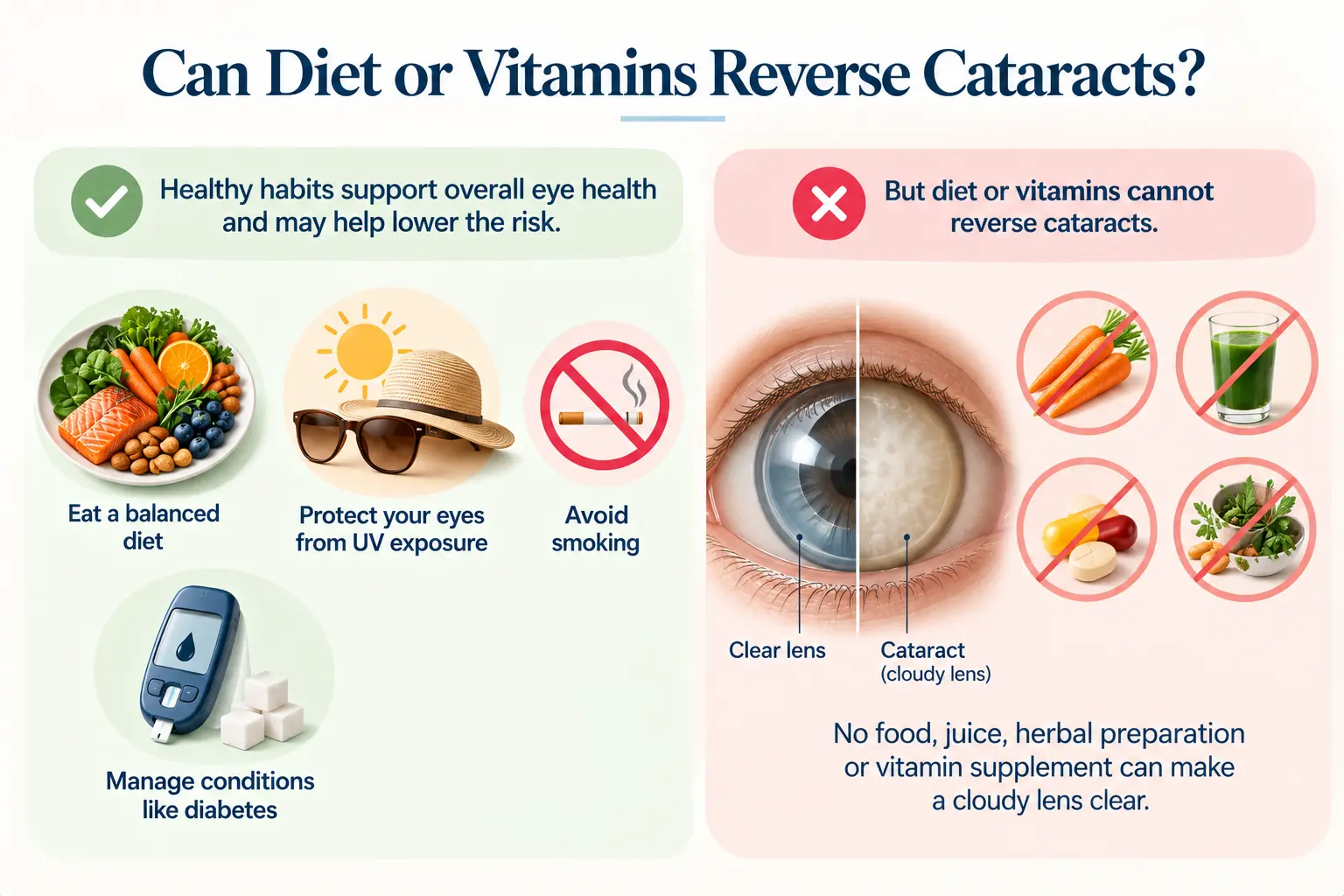
A healthy diet helps maintain overall eye health.
Protecting your eyes from excessive UV exposure, avoiding smoking and managing conditions such as diabetes can also help reduce some factors associated with cataract development or progression.
But healthy habits and cataract treatment are not the same thing.
Eating more carrots will not make a cloudy lens clear.
Neither will a particular juice, herbal preparation or vitamin supplement.
There is currently no diet that can reverse an established cataract.
So if you already have one, think of a healthy lifestyle as protective care for your eyes, not as a replacement for treatment.
Then When Can You Avoid Surgery?
This is where the answer becomes more reassuring.
You don’t need cataract surgery simply because an examination shows that you have a cataract.
If your vision is still good enough for the things you need to do, your ophthalmologist may recommend monitoring it instead.
For example, if you can comfortably:
- Read
- Work
- Watch television
- Move around safely
- Recognise faces
- Perform your usual daily activities
You may not need to operate immediately.
The American Academy of Ophthalmology and National Eye Institute both note that people generally do not need to rush into cataract surgery when symptoms are mild.
The important thing is to keep monitoring your vision.
“Not ready for surgery” does not mean “ignore the cataract.”
Cataract surgery isn’t usually based on how “mature” the cataract looks. What matters is how much it is affecting your vision and everyday life.
What If My Glasses Still Help?
Keep using them.
There is no reason to stop wearing glasses because you have developed a cataract.
In the early stages, updating your prescription can sometimes make a noticeable difference.
You may also find that small changes around you help.
Try:
- Increasing light while reading
- Using larger print
- Reducing glare
- Wearing UV-protective sunglasses outdoors
- Using magnification for detailed work
But there is a point where glasses can no longer compensate for the cloudiness of the lens.
If your vision remains blurred even with the correct prescription, the cataract may have progressed enough to start affecting your daily life.
How Do You Know It Is Time for Cataract Surgery?
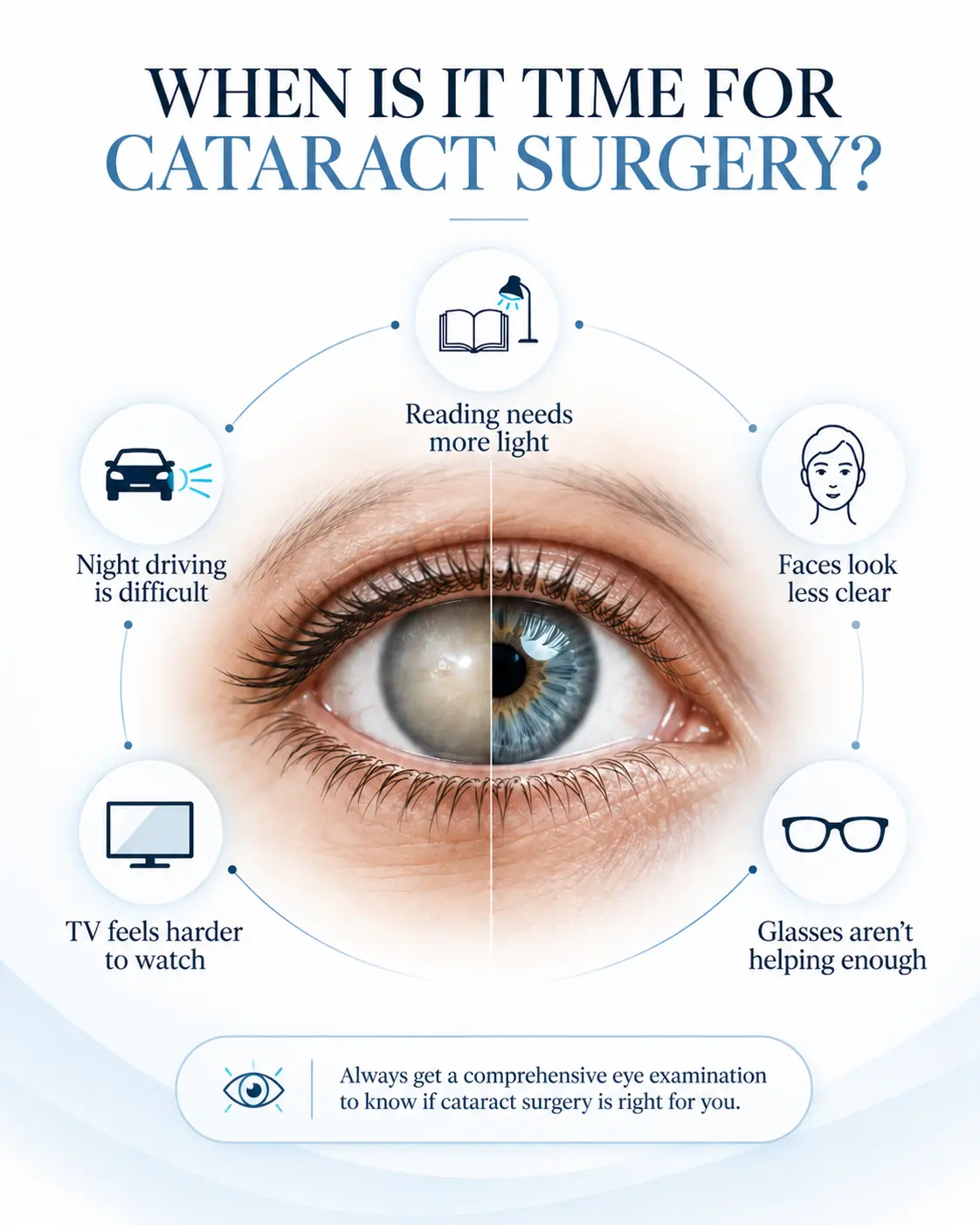
This is probably more important than asking how “big” or “mature” your cataract is.
Ask yourself what you can no longer do comfortably.
Maybe you have stopped driving at night because headlights look unbearably bright.
Maybe you need much more light to read.
Maybe your work requires visual detail, and you are struggling to keep up.
Maybe faces across the room no longer look as clear.
Or perhaps you constantly change your glasses and still don’t feel your vision is right.
These are situations where cataract surgery becomes worth discussing.
The decision generally depends on whether the cataract is causing vision loss that interferes with everyday activities such as reading, driving, or watching television.
You don’t have to wait until you are almost unable to see.
And you don’t have to undergo surgery simply because a cataract has been detected.
The right time is when the cataract affects the quality and function of your vision enough that the potential benefits of surgery outweigh the risks for you.
What Happens If I Keep Waiting?
An early cataract can often be monitored.
In most cases, waiting for surgery does not harm the eye or make a later cataract operation more difficult.
But this does not mean you should stop having eye examinations.
Cataracts can progress at different rates.
More importantly, blurred vision isn’t always caused by cataract.
A person may assume that every change in vision is because of the cloudy lens, while another condition such as glaucoma, diabetic eye disease or a retinal problem may also be present.
Regular examinations help us determine whether the cataract is actually responsible for the change in your vision.
Is Cataract Surgery a Permanent Cure?
Cataract surgery removes the cloudy natural lens from the eye.
It is then replaced with a clear artificial lens called an intraocular lens (IOL).
This is currently the only established way to remove an existing cataract.
The surgery doesn’t simply “clean” the natural lens.
The surgeon removes the cloudy lens and replaces it.
That is also why glasses, medicines, and lifestyle changes cannot do the same job once the cataract becomes visually significant.
Cataract surgery is a common and generally safe procedure, but it is still surgery. Your ophthalmologist should discuss your individual eye health, expected visual benefit, lens options and potential risks before you decide.
What If I Have Cataracts in Both Eyes?
Having cataracts in both eyes does not mean both eyes have to be operated on at the same time.
If surgery is needed, the eyes are generally treated separately.
Timing depends on your vision, the condition of each eye, and your ophthalmologist’s assessment.
So don’t assume that being diagnosed with cataracts in both eyes automatically means two surgeries immediately.
The same principle applies:
Treat the eye when the cataract is actually affecting its function.
The two eyes don’t always age at the same speed. Cataracts can be present in both eyes without affecting both eyes equally. One eye may cause significantly more visual difficulty than the other.
Can You Slow Down Cataract Progression?
There is no guaranteed way to stop an established cataract from progressing.
But some habits are still worth maintaining for overall eye health.
Protect your eyes from excessive UV exposure.
Avoid smoking.
If you have diabetes, keep your blood sugar well controlled.
Use protective eyewear when there is a risk of eye injury.
And most importantly, don’t ignore changes in your vision.
These steps may support eye health, but they should not be presented as a way to dissolve an existing cataract.
When Should You Get Your Eyes Checked?
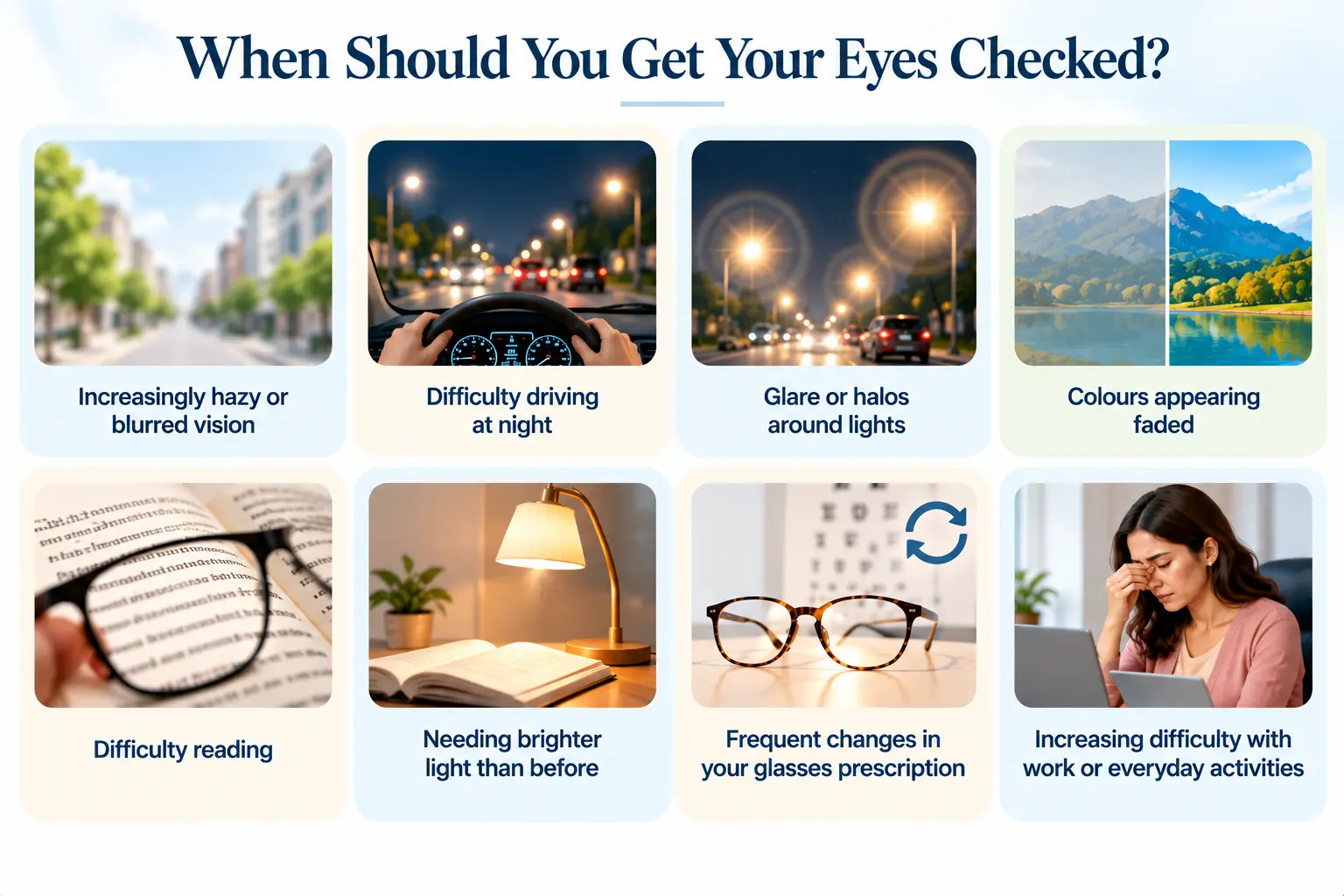
Don’t wait until your vision becomes severely blurred.
An eye examination is worth scheduling if you notice:
- Increasingly hazy or blurred vision
- Difficulty driving at night
- Glare or halos around lights
- Colours appearing faded
- Difficulty reading
- Needing brighter light than before
- Frequent changes in your glasses prescription
- Increasing difficulty with work or everyday activities
And remember: sudden vision changes are different.
Sudden loss of vision, flashes of light, a sudden increase in floaters, severe eye pain or a curtain-like shadow across your vision needs prompt eye care. These symptoms shouldn’t be blamed solely on cataracts.
So, Can Cataract Be Cured Without Surgery? - A Message From My Practice
A cataract diagnosis does not come with a deadline.
If it is early and your vision is still serving you well, you often don’t need to rush into surgery.
Use the right glasses. Improve your lighting. Reduce glare. Keep your regular eye examinations.
But don’t confuse these measures with a cure.
If you are wondering whether cataracts can be cured without surgery, the honest answer is no. There is currently no proven medicine, eye drop, diet or home remedy that can remove an established cataract.
And if you are asking whether an early cataract can be cured without surgery, the answer is also no, but an early cataract may be monitored and managed without immediate surgery when it is not significantly affecting your vision.
Eventually, if the cloudy lens begins interfering with the way you read, work, drive or live your everyday life, cataract surgery may be the right step.
The goal is not to operate as early as possible.
It is to make the decision at the point when your vision actually needs it.